National Park Safari
The highest leopard density on Earth
South · Feb – Jul
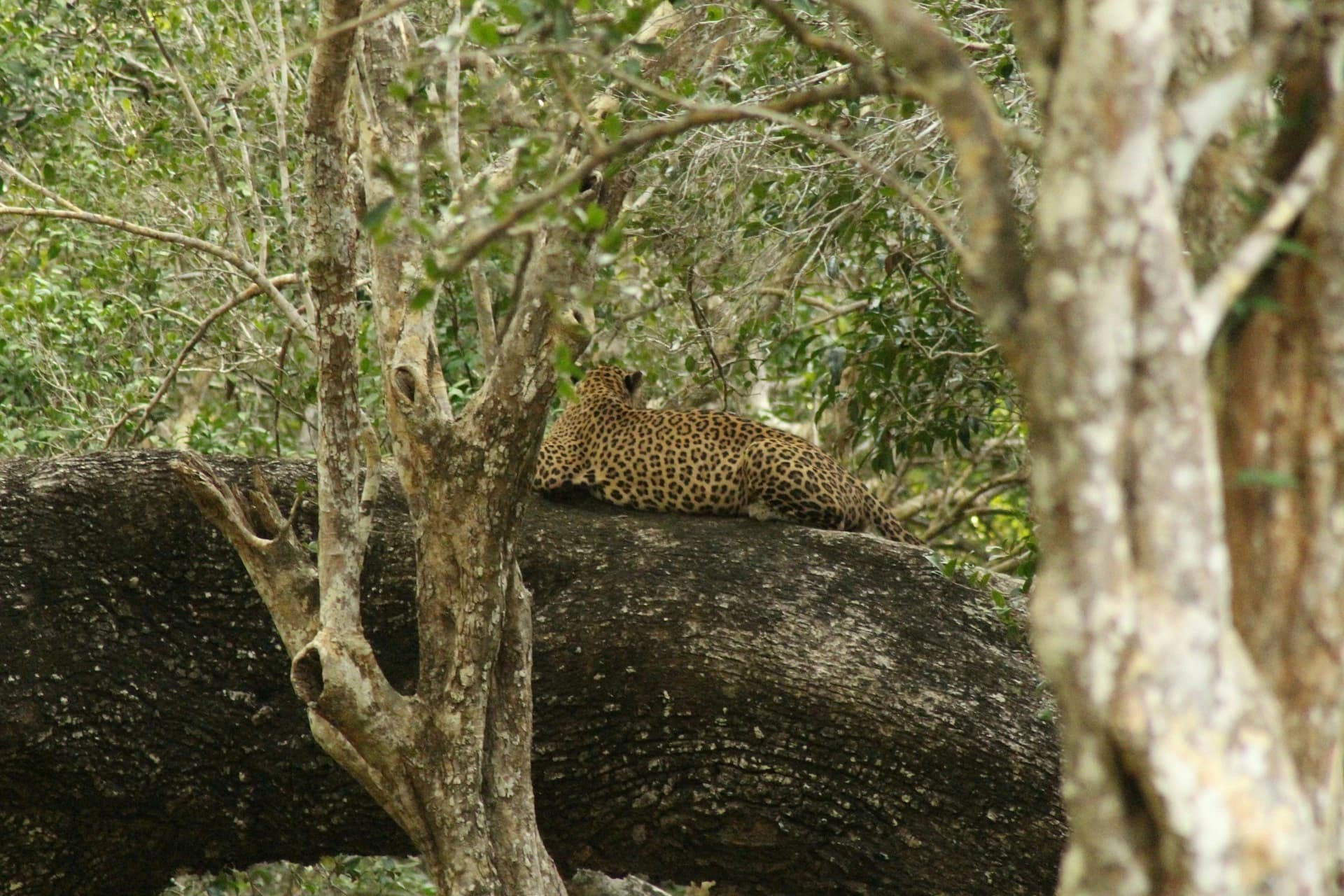
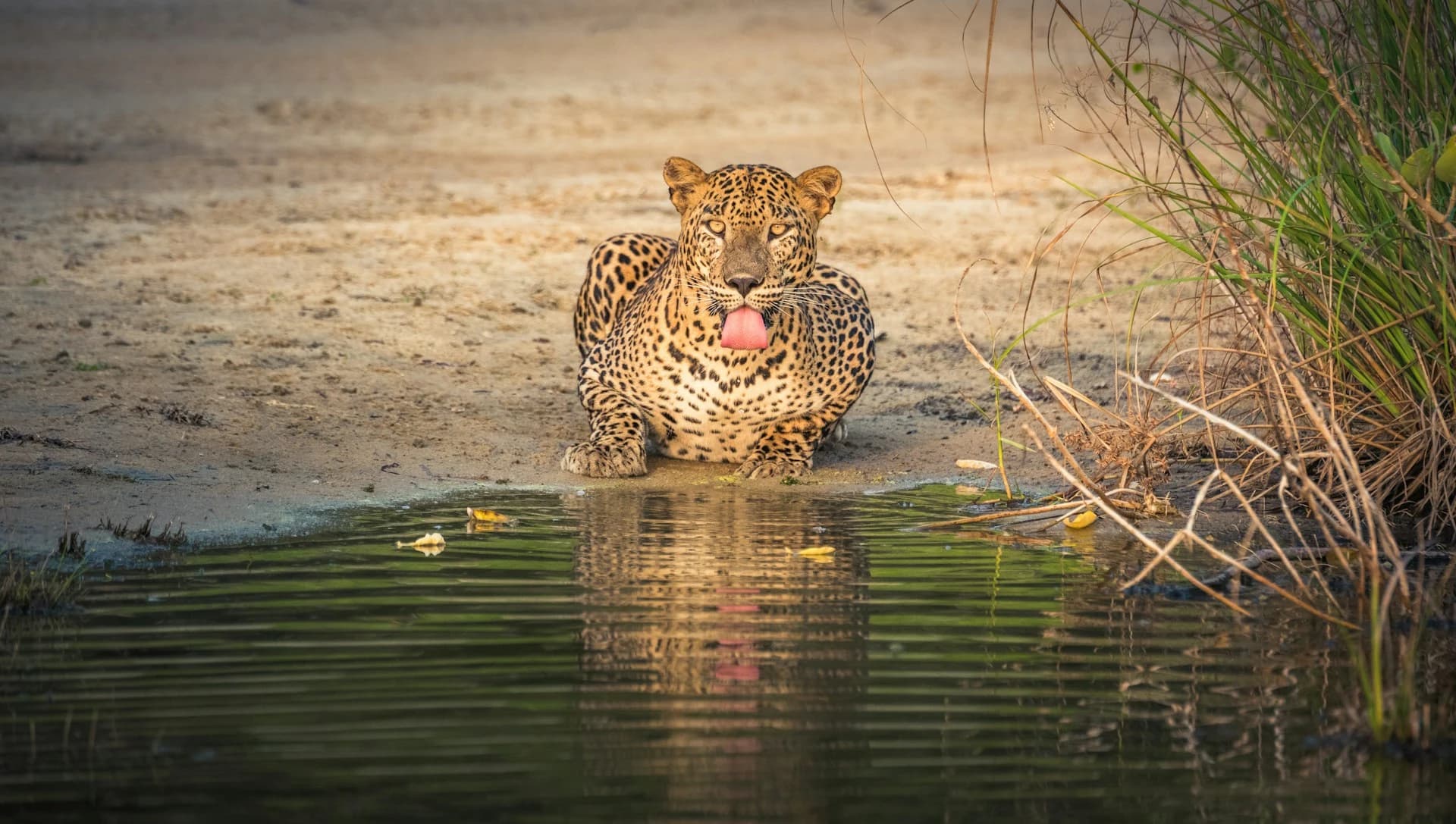
Yala is the park people picture when they think of a Sri Lankan safari — and for once the reputation holds up. Block 1, the stretch most drives cover, carries the densest leopard population recorded anywhere in the world. That's not a marketing line; it's why wildlife photographers keep coming back to this one corner of the southeast coast.
What makes the cats easier to see here than in most of Africa is simple: Sri Lankan leopards sit at the top of the food chain with nothing to compete with, so they're bolder in daylight — draped over a rock, walking the track ahead of the jeep, unbothered. You still need luck and an early start. But the odds are genuinely in your favour.
The trade-off, and we'd rather say it plainly, is that Yala is popular. On a good sighting you'll share the moment with other jeeps. How much that matters depends on your driver knowing where to be before the crowd arrives — which is the part we actually control.
Block 1 has more leopards per square kilometre than any protected area on the planet. In the dry months, sightings on a single morning drive are common rather than lucky.
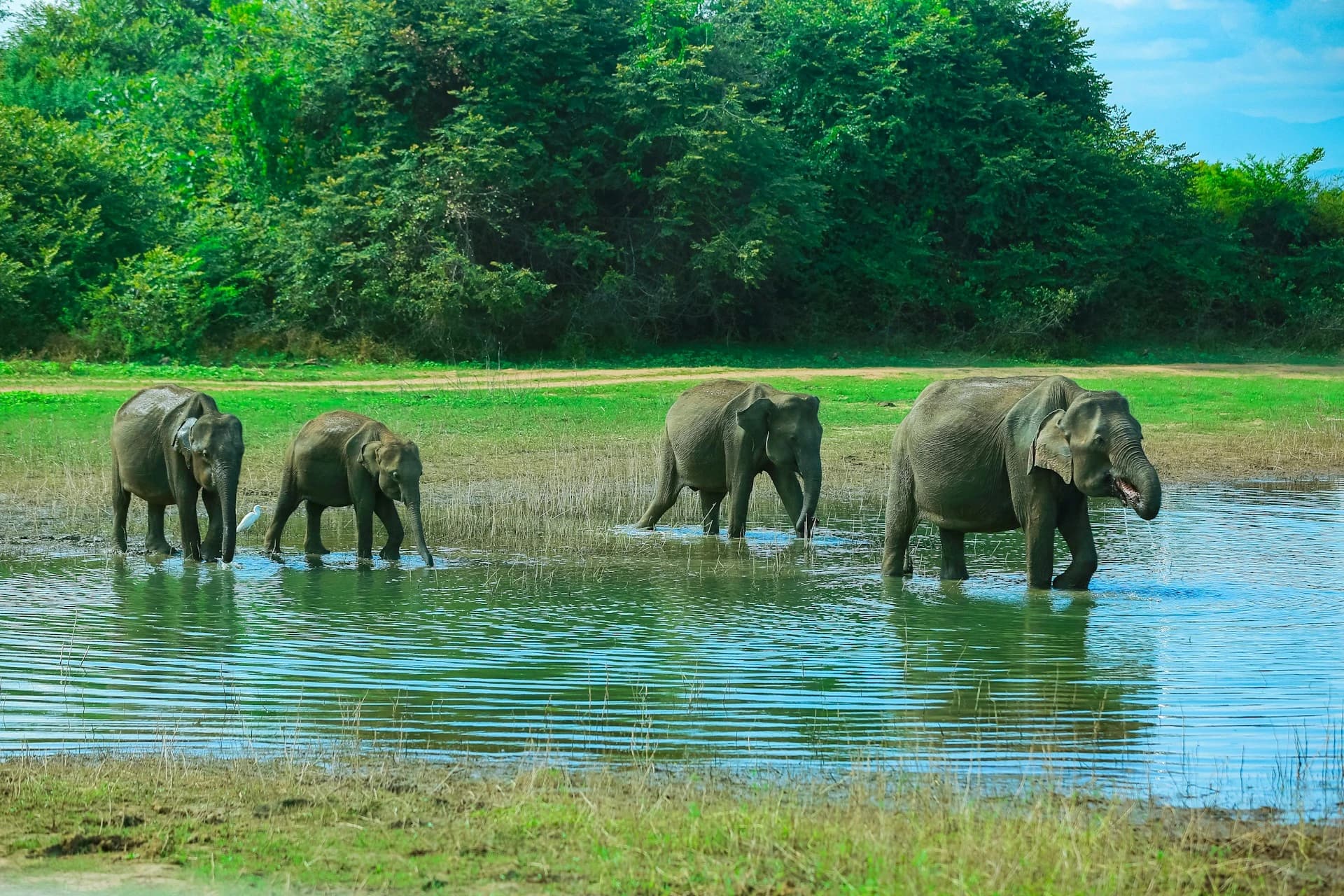
Elephants, herds of spotted deer and sambar, wild buffalo, crocodiles basking at the waterholes, and one of the island's best chances at a sloth bear in June and July when the palu fruit ripens.
From painted storks and peafowl to migratory waders on the lagoons. Even on a quiet leopard day, the birdlife keeps the drive worthwhile.
We run first-light drives and know the quieter interior tracks — the ones the day-tripper jeeps skip. It's the difference between watching a leopard and watching ten jeeps watch a leopard.
Gates open around 6am, and the first hour is the one that matters. Leopards move at the cool edges of the day, so a drive that starts at dawn puts you in the park while the cats are still active and the light is soft enough for photos. A late start usually means a hot, quiet park and a leopard sleeping somewhere out of view.
You're in an open 4x4 with a driver who works these tracks daily. Sightings in Yala travel fast over the radio network between drivers — that cuts both ways. It can lead you straight to a leopard, or it can pile fifteen jeeps into one spot. A good driver reads which sightings are worth joining and which are better skipped for a quieter track where the next animal is yours alone.
Bring water, a hat, and a proper camera if you have one — phone zoom rarely does a distant leopard justice. Mornings can be cool at the start and hot by the end, so layers help.
The one we recommend. Roughly a 5:30am pickup for the 6am gate, out around 10–10:30am. Best light, most active animals, best leopard odds.
A 2:30–3pm start until the gates close near dusk. Cooler light late on and fewer jeeps than a busy morning, though animals are less active in the early heat.
Both sessions with a midday break. Worth it for serious photographers or anyone who wants to slow down and let the park come to them rather than rushing one loop.
Best time
February to July is the sweet spot. As the dry season sets in, waterholes shrink and animals — leopards included — concentrate around the few that remain, which makes them far easier to find.
Getting there
Most drives start from Tissamaharama, about 20 minutes from the Palatupana main gate. From the south-coast beaches (Mirissa, Weligama, Tangalle) it's roughly 2.5–3 hours; from Ella around 2.5 hours; from Colombo or the airport allow 5.5–6.5 hours, so most people pair Yala with a night in Tissa rather than day-tripping it.
How long
A single game drive runs about 3.5–4 hours. Plan a half day for one drive, or a full day if you want both morning and afternoon sessions.
Block 1 usually closes for around six weeks from early September while the park is at its driest. Dates shift year to year, so we confirm the current closure and switch you to a nearby park if your trip falls inside it.
Tell us your dates and what you'd love to see. We'll send a friendly, no-obligation itinerary and quote within 24 hours.